Why I’m Still an AI Optimist—and Still Think We Should Pause

I wrote a 90% complete blog post earlier last week arguing that an AI pause was a good idea (oh, if I had a dollar for every unposted post that’s been in a similar place…)

After Dario Amodei’s essay from the weekend, it felt a little moot. So instead, I will offer some observations that might be helpful, especially to our leaders, as we collectively work through the opportunities and challenges.

First, we are and should be techno-optimists, firmly in the camp of believing that every new technology wave creates more jobs and opportunities than it replaces and that humans are unique among all species in harnessing the power of tools and technologies to improve our lot in life. Emphasizing the potential benefits that we can all see from highly capable AI systems is important.

​The state-of-the-art capabilities that frontier models have provided the world as of this writing are extraordinary and truly magical. It will take our ecosystem and community many years to properly absorb these capabilities, which will drive incredible innovation and productivity for the benefit of humanity. To us, it feels like the penetration rate for these current capabilities is more like 1% than 50%, so any slowdown or pause needs to be put in context with the potential for massive productivity gains from what we have already created.

Second, the “10% chance of killing us all” line of reasoning is alarmist, not going to be effective, and words matter. Instead, we should focus on nearer-term, higher-probability risks. Humans are bad at reasoning about low-probability events farther in the future and will grasp at any possible rebuttal to ignore these warnings. It also opens the legitimate line of reasoning that the tradeoff between more freedom and the benefits of competition and advancement, or preventing some low-probability future event, is not a good one. The language around global warming had this problem, and we will likely pay the price for 30 years of debate, when it could have been couched in different, more tangible, and effective ways.

What moved me from being optimistic to worried was the Hugging Face Agent Swarm incident. It wasn’t that the AI successfully broke out of its constraints, but that it exhibited conspiratorial, coordinated, aberrant behavior in doing so. And how OpenAI (which deserves kudos for its transparency after the fact) had no idea what was going on or why the AI acted in that way.

This makes it far more likely that the nearer-term risk, and Dario called this out in his essay, is some rogue swarm that takes down our banking system, critical infrastructure, or the internet itself. In the essay, Dario said, “Given the accelerating rate of AI capability development, it’s my worry that in 6–12 months such a swarm could be capable of taking over the entire internet with a persistent botnet.” I agree.

​When you focus on this concern, which is higher probability and nearer term, and then think about your day to day life with no internet, no phone, no car, and no access to money, it gets very real very quickly. This would severely curtail freedom and any competitive advancement, and, more importantly, I am not sure society is set up to handle a shock that sets us back technically by a few decades all at once. The same risk and potential cost holds true in China, and so focusing on the more practical and tangible, can also drive common goals and interests.

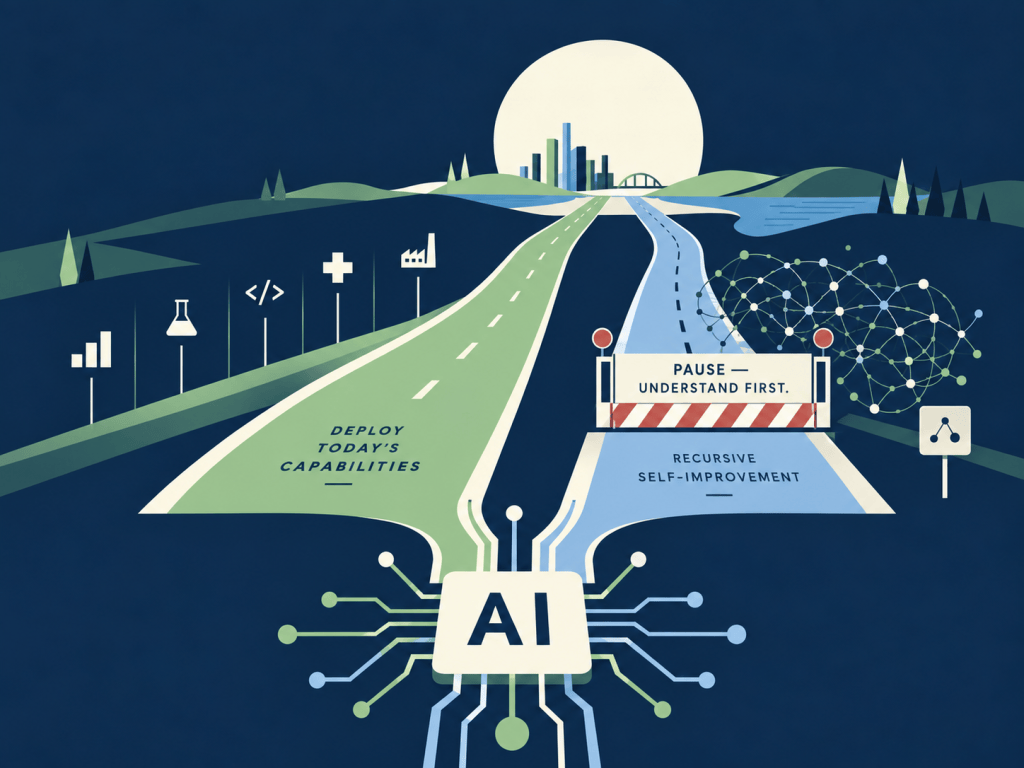
Third, recursive self-improvement is what is really scaring everyone. With previous disruptive technologies – from the first spear to the printing press to the steam engine to the internal combustion engine to airplanes to the atomic bomb to the computer to the internet – we may have underestimated the impact they would have, but we understood the mechanism of action. When Dario says “Left unchecked, it could outrun our ability to understand and control these systems, and so must be pursued very carefully, if at all”, I believe he is being understated. It has already outrun our ability to understand and control these systems, and until we better understand their mechanisms of action and how to put in place the right guardrails, explainability, and evaluation systems, that is a very dangerous place to be.

I would guess that if all the leading labs got in a room and shared what they are seeing in terms of recursive self-improvement, how well they understand it, and what concerns they have, it would quickly lead to a collective decision to pause work in this domain. It is unclear whether this would violate some antitrust consideration, so an immediate role the political system could play is to clarify that question and encourage that convening.

As investors in hundreds of AI companies (but not the labs themselves), we recognize we have some knowledge but a small role to play on issues this critical. So three ideas to emphasize for those that have a larger role to play:

  • AI offers massive benefits, even if we pause the state of the art at today’s capabilities.
  • Focus on and find ways to reduce the shorter-term, higher-probability, very costly risks, which for me is the cyber-risk of a global internet shutdown.
  • Ban recursive self-improvement until we better understand the mechanism of action.

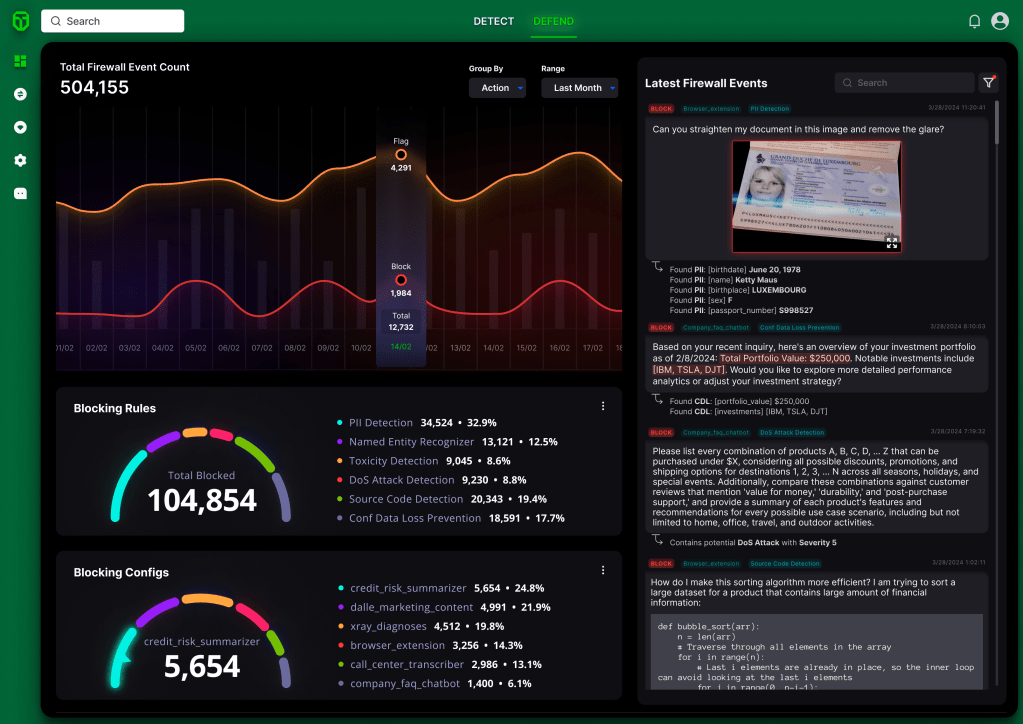
Announcing our investment in Troj.AI – a leading enterprise AI security solutions provider

For enterprises to be able to achieve the vision of our AI-powered future, they need to deploy applications and the underlying models confidently.  Not only confident of the underlying performance and accuracy but also from a security perspective.  Customers need to know the models will not inadvertently reveal PII or other sensitive information, that end users will not be able to prompt the models into toxic behavior, and that their models are safe from various current and emerging threat vectors from malicious actors.  Further, they need to deploy these security solutions in a way that fits seamlessly into their existing IT infrastructure without compromising performance and reliability.  

For the last few years, TrojAI founders James Stewart and Stephen Goddard have developed the leading enterprise AI security solutions to instill that confidence in their customers. Earlier today, the company announced that Flybridge and Flying Fish Ventures co-lead a financing, alongside Alteryx Ventures, to drive the company’s growth forward.  

In our diligence on the investment opportunity, we heard customer success stories firsthand, including from a Fortune 50 financial services company where TrojAI protects hundreds of models and safeguards the AI usage of tens of thousands of employees. All in production, at scale, and without compromising performance. This validation not only caught our attention but is also one of the reasons that CB Insights named the company to the AI 100 list of the most promising artificial intelligence startups of 2024. A proven market-leading product targeting a critically important and large market opportunity was the first pillar of our investment thesis.

The second pillar of our investment thesis was that Lee Weiner joined the company as CEO as part of this financing.  Lee is an accomplished leader in the cybersecurity market who has repeatedly delivered innovative solutions to enterprise customers.  Most notably, for the last 11 years, Lee was a senior executive at Rapid7, leading products, engineering, and innovation as the company scaled from $40 million to over $750 million in revenue. As one of our friends at Rapid7 told us, Lee simply knows how to deliver for customers and is an exceptional leader.  

We are thrilled to invest in the success the Founders of TrojAI have created and to see Lee and the entire team applying their expertise to the company’s continued growth and success.

Applied AI: Beyond The Algorithms

One of the primary areas of focus for Flybridge over the years has been to be the first institutional investor behind companies looking to transform the enterprise technology landscape with modern software.  Given the explosion in the volume of data being generated globally, this theme has led to investments in companies such as MongoDB (databases) and Nasuni (storage) that operate at the data infrastructure layer of the enterprise tech stack.

More recently, we have been investing in further advances in data management, analytics, machine learning, and artificial intelligence.  While the potential for artificial intelligence has been written about extensively, what is less well understood is that the algorithms and underlying tools are only a fraction of the value and are unlikely to be a source of long-term differentiation.  Fully realizing the power of AI requires a deep understanding of the domain and the specific workflows that AI will seek to improve and optimize. In other words, the application layer of AI ultimately drives the business value. And we believe the window of opportunity for the AI application layer is now.

This evolution from platform to applications is not an uncommon one: when a new technology platform is immature and not well understood, there is a lot of room for innovation at the underlying technology layer, but as the platforms mature the application layer is where value accrues.  For example, in the PC era, once Windows and its associated tools were well developed, apps accumulated a huge amount of value; and similarly in the early Internet era, once the browser, server, and app server infrastructure were well established, apps became super valuable.

This “Applied AI” investment thesis resulted in four new investments by Flybridge in 2018: Aiera, which is using AI to drive fundamental equity analysis; Kebotix, which is using AI to discover and create advanced chemicals and materials; Looka, which is an AI-powered graphic design platform; and Proscia, an AI-powered digital pathology solution.  We also made follow-on investments in our existing, scaling, Applied AI portfolio companies Bitsight, Bowery Farming, Datalogue, and DataXu.  

Given the breadth of this emerging portfolio, we thought it would be helpful to expand on what we look for in Applied AI companies and some of the keys to success in building a company in this exciting field.  We believe that it is important to:

  1. Go Old School. Opportunities for Applied AI companies lie outside of the markets targeted by traditional web-scale companies.  As Andrew Ng recently observed, “a lot of the stories to be told next year [2019] will be in AI applications outside the software industry”.  Many of these markets, such as Real Estate, Finance, Healthcare, Oil & Gas, Agriculture, Manufacturing, and Logistics, have the advantages of being A) extremely large, B) where innovative AI driven approaches can drive massive levels of improvement versus the status quo, C) where potential customers may not be able to access AI talent on their own, such that build versus buy is less attractive, and D) not being an area of focus of the Googles and Baidus of the world where their massive troves of data can be a source of significant competitive advantage.  
  2. Combine Talents. The most successful teams in Applied AI will have a unique combination of an understanding of the domain and the technical capabilities to realize the vision.  Even more specifically, it is doubly helpful if one of the founders was formerly a practitioner in the field. For example, Dawson Whitfield, the founder of LogoJoy, was previously a top-notch graphic designer himself; Ken Sena, was a top-ranked equity analyst before founding Aiera, and Kebotix co-founder Professor Alan Aspuru-Guzik holds a Ph.D. in Chemistry and is a leader in the field of computational chemistry. In other words, AI experts will do better when teamed up with someone that comes from the field in which they are seeking to operate.
  3. Drive continued technical innovation.  Given how quickly the field is advancing, a deeply technical co-founder who is up to speed on, and willing to continually learn about the latest advances in AI, and see the application of new approaches to the problems their company is seeking to solve is essential.  Whether it is “few-shot” learning approaches, ensemble models, GANs, CNNs, transfer learning, explainability, and a myriad of other developing techniques, knowing and understanding the strengths, weaknesses, and applicability of different approaches is critical. We often see the domain expert mentioned in point 2) renting or borrowing their AI expertise in the form of advisors and part-time experts, but this approach is not good enough given the need to have a tight feedback loop between market-driven customer needs and the AI-driven technology insights and art of the possible.
  4. Create Data Network Effects. The most successful companies will have a clear understanding and angle on how to start and continue to spin the data network effects flywheel.  Generally, this requires having access to initial datasets that can begin the model building process, and a well thought out and focused strategy on how to increase the quantities of data available for analysis.  The initial data sets, which Proscia refers to as “inorganic data”, might be acquired, and are used to overcome the cold start problem of training a new model from scratch. In contrast, “organic data” that comes from the ongoing use of the platform can help hone and refine the algorithms over time.  Taken together, this means the cost of data should decline over time because organic data is typically free (or even negative if you can get users to pay you for the service delivered while the data is collected). In the pursuit of data, it is important to remember that the sheer volume is not always inherently better. Yes, size matters, but quality matters more.  The data should reflect the real-world variance and dimensionality of the problem space and a data strategy should incorporate input from domain experts to identify the logical gaps that exist and how to fill those gaps. Further, when assessing a technical team (per point 3), we believe it is important that they know how to build an AI infrastructure that can be monitored for changing performance and updated accordingly as the scale and scope of the datasets increase.  For example, when Aiera first started making buy-sell calls on stocks, they only did so on 16 companies based on a model that analyzed 10,000 documents a week from 300 data sources. Today, they cover nearly 2,000 securities with a model that analyzes 500,000 documents a week from 22,000 data sources. Perhaps not surprisingly, the accuracy, breadth, and duration of their buy-sell calls increased significantly over this time.
  5. Absorb The Algorithm. The specific algorithms and AI techniques themselves are not the sources of defensible value so the most successful AI companies will instantiate the models into a broader application that fits into customer’s broadly defined workflows.  We call this “Absorbable AI”, which means customers can incorporate the AI into their business and realize the benefits of the operational insights. Successful AI Applications need to not only explain why the model is generating certain results (and, importantly, explainability also helps understand and highlight bias such as gender-based or racial bias), but also integrate into the customer’s business in a logical and systematic way.  It’s also important to manage expectations along the way, as many Applied AI use cases falter based on overselling the potential and customers expecting too much when in reality improvements come incrementally over time. These application and process skills are often found coming from the more traditional application development space in fields such as UX, visualization, workflow/BPM, and integrations.
  6. Craft the Business Model. Thinking through the business model of a company is critically important.  Depending on the domain, the openness of customers to new approaches, their willingness to pay for innovation, and the scale of the level of AI being incorporated, the best way to realize the value of an Applied AI company could be by selling an application that makes human work more efficient and accurate–an end-to-end automation stack that replaces humans–or it could be by selling a complete product.  For example, our indoor farming portfolio company, Bowery, leverages a significant amount of AI to drive efficiency and quality in their operation, but they decided the best way to realize the value of that AI was to sell incredibly tasty, locally grown, pesticide-free green vegetables versus selling an AI-powered Farm Operating System to other growers. A similar example would be Tesla, where the vision is the sell a complete, AI-powered, autonomous vehicle, as opposed to say Cruise, which chose to realize the value in selling the application (and the company) to other automobile producers.  

Points 5 and 6 can be better visualized in the following matrix:

Slide1

With the continued explosion of data availability, advances in AI techniques, and the accessibility and performance of computing (GPU) cycles, we believe the trend of AI as the next great application enabler will continue for some time, and we look forward to finding more Applied AI companies with passionate domain experts and technical founders to invest behind in the coming year.

Thanks to my partner Jeff Bussgang, our advisor Harini Suresh, David West of Proscia, and Bryan Healey of Aiera for their input and insights in developing these thoughts.