Random thoughts that attempt to shed light into the world of venture capital and entrepreneurship from Chip Hazard, General Partner at Flybridge Capital Partners.
Almost eight years ago, Dr. Emre Gençer, a principal research scientist at MIT, and some of his colleagues saw a challenge in the Industrial sector and its drive to decarbonize. On one hand, the Industrial sector accounts for 34% of global greenhouse gas emissions, so the need for innovative solutions was clear. On the other hand, for leaders of these companies, making decisions is hard given evolving technologies, a myriad of potential tradeoffs, capital intensity, and a high degree of complex interrelationships across the industrial sector. Emre feared that without an effective way to model and optimize decisions, Industrial companies would either invest in less-than-ideal ways or, more likely, defer essential decisions that could have a significant positive impact on their carbon footprint and operating costs.
This insight led to the creation of Sesame, an innovative software suite that simulates and optimizes the costs and emissions associated with decarbonization investments in heavy industry. Sesame is backed by seven years of deep research at MIT to develop both the data and the models to handle the complexity of these simulations, the tradeoffs and interrelationships therein, and the ongoing operating decisions and investments that will result. Working from plant-level data on up, the system offers economic, environmental, and systems analysis capabilities to accurately and rapidly evaluate industrial decarbonization solutions at scale and in so doing, they become a single source of truth from which optimal decisions can be made.
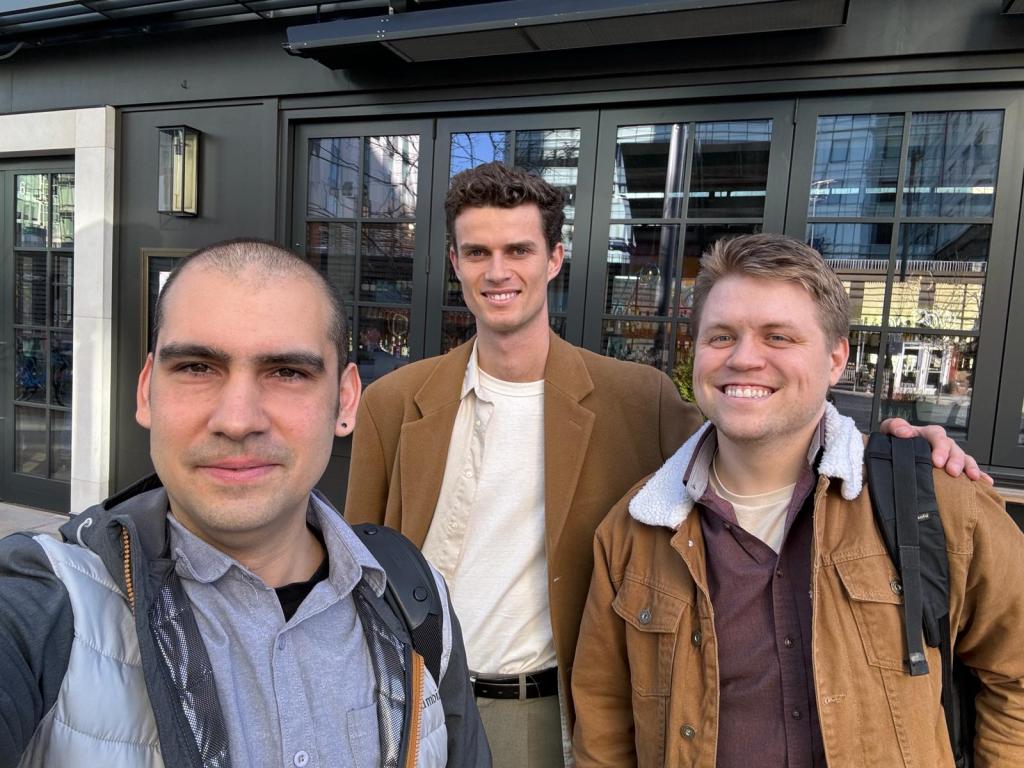
When we first met Emre and his co-founders Paul and Jim (shown below in the obligatory first-day founder selfie) last year, we were immediately drawn to the depth of their insights, the completeness of the solution that had created at MIT, the strong customer backing, their compelling plan to commercialize the platform in a software sector that analysts expect to exceed $9B by 2030, but most of all their passion for the space and the mission to drive effective decarbonization decisions across the heavy industry segment.
One of my greatest joys as a VC – and one that correlates with success – is the opportunity to work with deeply talented, exceptional founders looking to turn their passions and life’s work into a company that can succeed and thrive in the market. As a result, we immediately committed to work with the team to spin Sesame out of MIT, provide the initial financing, and partner with the team to build a compelling company over the coming years. Our friends at Powerhouse Ventures join us in this commitment and we are excited to see the company launch this week. More on this exciting company can be found in its announcement, website, and this excellent post from the Powerhouse Ventures team.
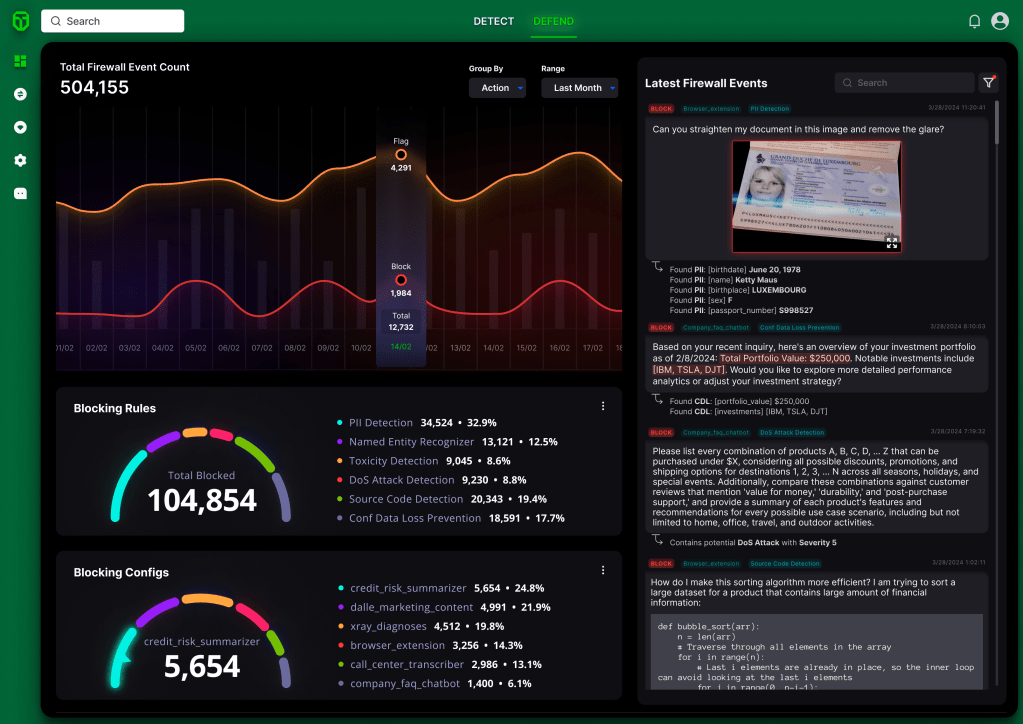
For enterprises to be able to achieve the vision of our AI-powered future, they need to deploy applications and the underlying models confidently. Not only confident of the underlying performance and accuracy but also from a security perspective. Customers need to know the models will not inadvertently reveal PII or other sensitive information, that end users will not be able to prompt the models into toxic behavior, and that their models are safe from various current and emerging threat vectors from malicious actors. Further, they need to deploy these security solutions in a way that fits seamlessly into their existing IT infrastructure without compromising performance and reliability.
For the last few years, TrojAI founders James Stewart and Stephen Goddard have developed the leading enterprise AI security solutions to instill that confidence in their customers. Earlier today, the company announced that Flybridge and Flying Fish Ventures co-lead a financing, alongside Alteryx Ventures, to drive the company’s growth forward.
In our diligence on the investment opportunity, we heard customer success stories firsthand, including from a Fortune 50 financial services company where TrojAI protects hundreds of models and safeguards the AI usage of tens of thousands of employees. All in production, at scale, and without compromising performance. This validation not only caught our attention but is also one of the reasons that CB Insights named the company to the AI 100 list of the most promising artificial intelligence startups of 2024. A proven market-leading product targeting a critically important and large market opportunity was the first pillar of our investment thesis.
The second pillar of our investment thesis was that Lee Weiner joined the company as CEO as part of this financing. Lee is an accomplished leader in the cybersecurity market who has repeatedly delivered innovative solutions to enterprise customers. Most notably, for the last 11 years, Lee was a senior executive at Rapid7, leading products, engineering, and innovation as the company scaled from $40 million to over $750 million in revenue. As one of our friends at Rapid7 told us, Lee simply knows how to deliver for customers and is an exceptional leader.
We are thrilled to invest in the success the Founders of TrojAI have created and to see Lee and the entire team applying their expertise to the company’s continued growth and success.
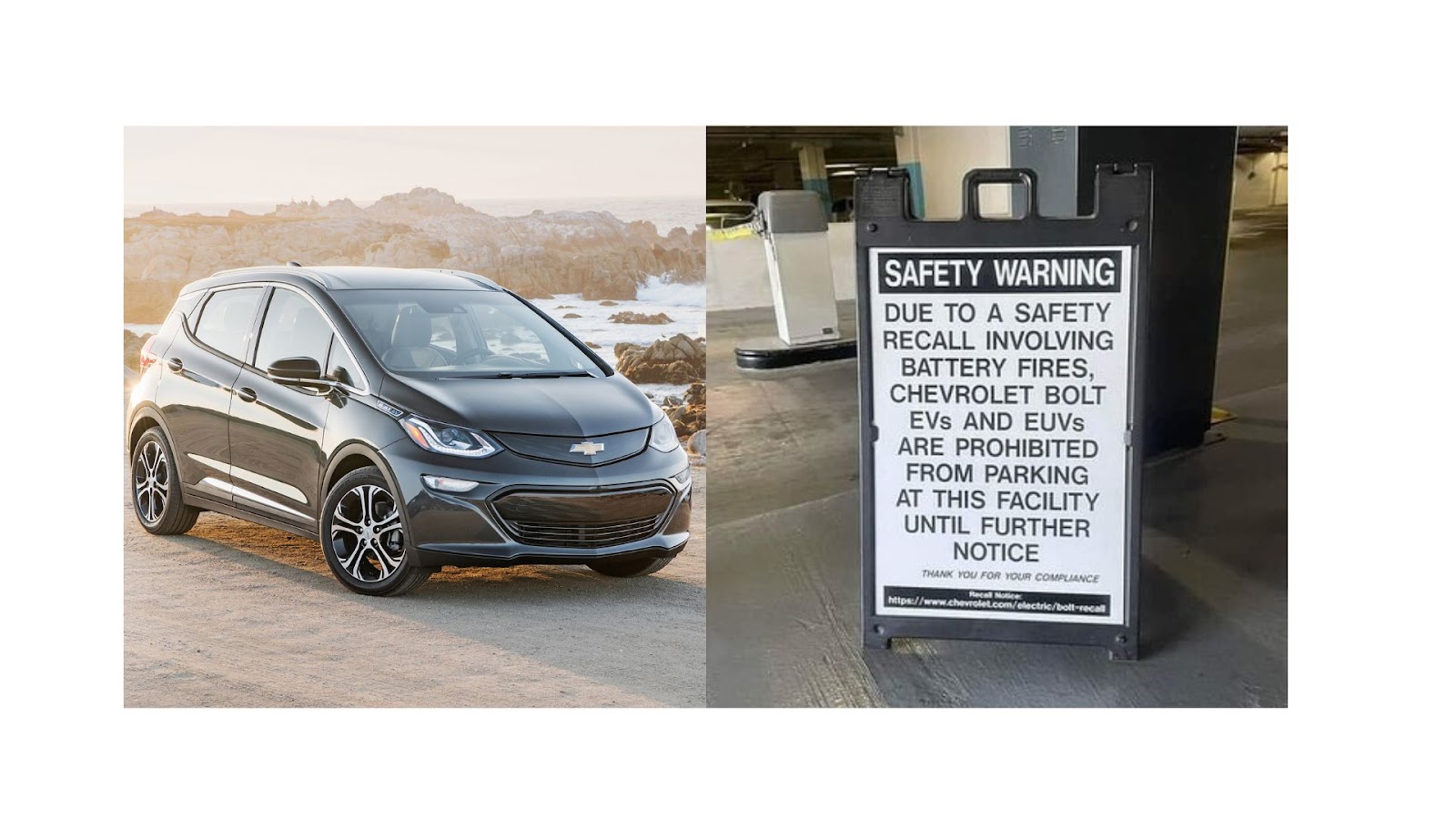
I used to own a Chevy Bolt. Sparky was its name, and it was a high-quality commuter car. One day, a couple of years into ownership, a battery defect caused Bolts to catch fire unexpectedly, and my office garage put up a sign saying that Bolts were no longer allowed in the building. Sparky, now garageless, was very sad.
Electrification has the significant potential to mitigate emissions and decarbonize energy supply chains, making it an important strategy for reaching net zero goals. However, doing so requires high-quality, affordable, and powerful batteries. As my Bolt story shows, for any complex engineered product to reach mainstream production levels and adoption, a robust quality control system is required. Sadly, Sparky will not drive the electrification revolution.
The same was true for the Semiconductor market, where companies like KLA (nearly $10B in revenue and a $100B market cap) enabled the industry to increase yields and improve quality with a suite of monitoring, inspection, and review tools that are now used throughout the chip fabrication process.
As a result, and in addition to the company fitting squarely within our AI-infused complex systems thesis, when Jeff Peters of Ibex Mobility introduced us to the team from Glimpse, we were immediately attracted to the investment opportunity. The three founders – Peter Attia, Patrick Herring, and Eric Moch have a combined 25 years in the Li-ion battery industry, including deep industry (Tesla and Toyota) and academic (Stanford and Harvard PhDs) expertise.
(Left to right: Patrick, Peter, and Eric)
Through this first-hand experience, they realized that the lack of adequate battery quality inspection technology was holding back the industry and our electrified future; preventing the ramp-up of Gigafactories; costing the industry billions in the form of lower yields and field-found defects; and leaving Sparky and I in the dust (of on-street parking).
The Glimpse team leveraged their domain understanding to design from the ground up a high-throughput, high-accuracy, battery quality inspection platform optimized for high-volume battery production and battery assembly environments. The company’s platform marries CT scanners, which they saw the power of in a lab setting at Tesla, with a modern AI-powered analytical software stack and data pipeline to drive unprecedented customer results.
We closed a seed round alongside Ibex Mobility in 2023, and today (ahead of schedule), the company is launching with paying customers in production. If you are intrigued as to what the future of battery quality inspection looks like at scale, they also released into the public domain a dataset of 1,000 batteries that were scanned and processed by the Glimpse technology, which can be found in their portal here.
We are thrilled to back this talented team, tackling a hard and important problem that will help drive a safe and rapid transition to an electrified future and make Sparky (RIP) happy again.
Over our 22-year history, Flybridge has always focused on investing in trends that will define business and society in the future. In fact, our name is a nod to the highest deck on a boat, offering an unobstructed view of the waters ahead. From this vantage point, we scout for opportunities and look for ways to partner with Founders who are pioneering and shaping the future.
The future we see today is a world permeated by Artificial Intelligence. There will be no such thing as an AI company, as every company will be an AI company. Our focus as a firm is solely to back ambitious Founders at the pre-seed and seed stages who are creating and building transformative companies for this AI-powered future.
Source: DALL-E, “A Future Woven with Intelligence”
We are not new to this space. Our first wave of AI and ML investments were in companies focused on using data to derive insights, allowing companies to improve decision-making. We told graduates to “Forget Plastics – it’s all about Machine Learning” in 2012, and we christened this cohort of companies as Full-Stack Analytics companies in 2014. Portfolio companies from this time include a 2010 seed investment in ZestAI, a pioneer in leveraging AI for Underwriting, and a 2011 pre-seed that we led in BitSight, an ML and data-powered pioneer in the Cybersecurity Risk Management market.
Our second wave of AI investments fell into the category of what we termed in 2019 as Applied AI companies. We noted that the application layer of AI ultimately drives the business value, but effectively doing so requires a deep understanding of the domain, the specific workflows that AI will seek to improve and optimize, and how best to incorporate AI into end-user experiences to engender trust and drive engagement. Portfolio companies operating within this thesis include Aiera, Bowery, Brighthire, Proscia, and Syrup.
Throughout both waves, we leveraged our long history of investing in infrastructure to back Founders building platforms to (1) manage and operationalize data and (2) make it easier for developers to build, deploy, and manage high-performance mission-critical applications. These investments include companies such as MongoDB, which we first backed in 2009 and which today is a leading company in the “AI Stack” with over $1.6B in annual recurring revenue, as well as other developer experience and “modern data stack” companies such as Firebase, FeatureLabs, Datalogue, and Stackdriver.
In the last 18 months, the capabilities of AI systems have taken a massive leap forward. A combination of technical advances drove this leap — the marriage of globally connected infrastructure, which created massive data sets upon which AI systems could train, exponential increases in computing power per dollar, and wildly sophisticated software techniques. These core foundations are joined with an unprecedented level of technical understanding, speed of advancement, and adoption by enterprises, developers, and consumers.
The future potential this creates exhilarates us, and, as a result, we no longer view AI as one of our investment sectors but rather our sole focus — the nucleus of the next industrial transformation.
Flybridge’s Investment Focus: Five Insights into the Future
We are looking to partner with ambitious founders building along one of five dimensions. While we believe every company will eventually become an AI company, in today’s world, an AI-powered company means more than just using AI as a supplementary tool. It implies that AI is a core element of the company’s value proposition and provides unique customer value. This integration means that AI is deeply embedded in the company’s primary product or service, significantly influencing its strategy and operational processes.
1. Vertical SaaS that is AI native
By building and providing fully integrated solutions that are purpose-built for vertical-specific industries, a new generation of SaaS companies that are AI native have an opportunity to carve out massive market opportunities, building on top of the rapidly evolving horizontal tools offered by big tech, emerging AI platforms for builders and operators, and the open source community. As more traditional software capabilities commoditize (driven in large part by AI-powered co-pilots making it easier to develop applications), enduring and successful Vertical SaaS companies will not only streamline workflows but also will generate the outputs and insights these systems previously enabled humans to perform. As a result, we believe that over $1 trillion in vertical SaaS revenue is “up for grabs” in the coming decade and are excited to back Founders participating in this transformation. Some AI native Vertical SaaS companies in the extended Flybridge portfolio include Aiera, DayZero, Entr, Finkargo, Forcemetrics, H2Ok Innovations, Hansa, noetica, Porosity, Proscia, and Syrup.
Successful Founders in this market will need to deeply understand customer requirements, build quickly, develop self-reinforcing data moats, and create unique value for their customers through well-designed user experiences that build trust, drive usage, and create new experiences that make individual contributors and teams far more efficient and effective. Our colleagues Julia and Daniel expanded on this here and here.
2. Horizontal Applications that are AI native
Artificial Intelligence promises to improve decision-making, streamline operations, and generate outputs and insights, but realizing this promise requires building these capabilities into an application. By providing functional capabilities that bring AI practices to horizontal workflows that cut across industries, Founders can help companies realize the AI vision of operational efficiencies while tapping massive TAMs that disrupt existing non-AI-native incumbents. We believe the discontinuous innovation that AI can introduce into the Horizontal SaaS market — expanding the market dramatically through increased automation — puts over $3 trillion in revenue “up for grabs” over the next ten years. Some companies building AI-native horizontal applications in the extended Flybridge portfolio include Brighthire, MelodyArc, Meritic, Quilt, Tato, and Teal.
3. Data infrastructure and platforms for AI application builders and operators
As a team, we have seen significant success supporting Founders who are building developer data platforms. These companies have typically seized upon massive technical shifts, for example, the rise of the cloud, to create platforms purpose-built for the new architectures, use cases, and deployment patterns. AI represents another such shift, and Founders creating solutions to make applications easier to build, run, manage, secure, and monitor will thrive. Not only will new applications emerge, but also the underlying models – especially if fine-tuned and open-source – and model infrastructure (vectors, knowledge graphs, etc) create a new part of the stack to be developed and managed. Further, as we know, AI models are only as good as their training data and how models apply inferences to data in a timely manner. As a result, for many customers, the AI journey begins at the data layer, and we believe companies building the “modern data stack” will see the same success in the coming AI application boom as those companies that make it easier to build, deploy, run, and manage these applications. Taken together, we believe these markets will exceed $200 billion in annual revenue within ten years. In addition to prior investments in companies such as MongoDB and Firebase, some of the companies building data infrastructure and platforms for AI application builders and operators in the extended Flybridge portfolio include Appwrite, Arcee, Avala, Blaze, FiveOneFour, 5x, Flojoy, Freeplay, Metaplane, Portkey, and Xata.
These first three areas will come to dominate the enterprise software market, disrupting incumbents who will race to keep pace with new capabilities and trends. Outside the traditional enterprise technology realm, we are excited about — and have actively been investing in companies — in two additional emerging areas.
4. AI infused complex systems
In our Applied AI position paper published in early 2019 (here), we observed that in some cases, the best way to capture the value an AI-based system creates would be through selling a complete product or vertically integrated system. Each industry has different dynamics in this regard, but one example of the systems approach is Tesla selling autonomous EV automobiles versus providing autopilot or battery control systems to other OEMs. Given the dynamics of the auto industry and consumer preferences, a company could capture more value with a complete system (Tesla has a $780B market cap) versus being a vendor to the industry (Cruise was a billion-dollar acquisition). However, full systems companies in fields such as robotics have historically been challenging for seed-stage investors. They are complex — requiring multidisciplinary skills across engineering domains, hardware, software, and sophisticated AI, including adaptive control systems, vision, and perception systems – all of which make them more capital-intensive than we would like.
This category of new systems has begun and will continue to change as many underlying building blocks, components, and models mature, and AI makes it easier to develop software. Many of these advancements come from the autonomous vehicle space, and Founders with this experience will be exceptionally well-positioned to apply their learnings to other domains where the systems packaging approach is the best way to capture value and meet customers’ needs. Some companies currently building AI Infused complex systems in the extended Flybridge portfolio include AeroVect, Alloy Enterprises, Agtonomy, BotBuilt, Bowery, Clockwork, DexAI, Glimpse, HaloBraid, Integral, and Intramotev.
5. AI native offerings
What are the out-of-the-box ideas for new products and services that don’t yet exist? In some ways, this question is the hardest one to answer — and yet represents exciting opportunities. Each new discontinuous platform shift enables creative Founders to build vertically integrated startups that have the potential to create entirely new industries. For example, Uber’s end-user value proposition could never be contemplated until virtually every potential customer had a GPS-enabled computer in their pocket or bag.
While enabling AI technology is advancing rapidly, translating this innovation into consumer value relies on human strengths – creativity, empathy, and intuition for user needs. Founders operating at this intersection of cutting-edge AI and human-centric design will thrive and create new categories and unforeseen applications we can not live without ten years from now. This intersection between advanced AI and insightful human design will lead Founders to redefine product utility, shifting existing paradigms to embrace new, more intuitive experiences. Some current companies in the Flybridge portfolio building to this future vision include BoldVoice, Decipad, Oasis, and Splice.
The step-change we have all witnessed in AI’s capabilities — from improving decision-making to achieving a level of cognition and task completion that rivals human benchmarks — is just the beginning. We are excited about the potential opportunities across all five dimensions in the coming decade. If you are a Founder building to this AI-powered future, don’t hesitate to reach out. We invest exclusively in AI startups from pre-seed to seed, typically leading rounds. You can learn more about Flybridge on our website.
I’ve been obsessed with AI and its impact on our world for decades. This obsession led to several investments in the field, as I described four years ago in my blog posts on Applied AI: Beyond the Algorithm and The AI Paradox. So like many others, I have watched the evolution of generative AI and ChatGPT with keen interest.
At our Flybridge investment team meeting earlier this week, my colleagues asked how the explosion in the AI market compares to previous tech trends I have seen emerge over the last nearly 25+ years. Spoiler alert: I’ve been a VC for a looong time – see my reflections on 25+ years here).
While the move to the cloud (looking at you, MongoDB), mobility, and the rise of consumer social apps were all significant developments over the previous 15-20 years, they pale in comparison to the sudden change in the market over the last 12 months brought about, primarily by OpenAI and the launch of first GPT-3, more recently ChatGPT, and the rapid advances from other players such as Google.
In particular, I am struck by the speed of adoption and the incredible ubiquity and breadth of impact that the Large Language Models ( LLMs) and Generative AI already have. Today Groupthink is our always-on collaborative AI research assistant (picture a stateful marriage between ChatGPT, Google Search, and your favorite collaborative apps, and that’s Groupthink); we use the AI-powered no-code tool Blaze to build internal apps, Aiera provides me real-time transcriptions and AI-generated summaries of Wall Street events, Brighthire streamlines our hiring insights and processes with AI-powered interview summaries and transcripts, Proscia’s AI pathology platform will analyze my skin biopsy from the dermatologist, and my college-age son can use Teal to customize cover letters based on his resume and a potential job’s needs. And that is just an illustrative sample from our small Flybridge portfolio. Everything Everywhere All at Once, indeed.
(It should be noted that Everything Everywhere All at Once was an incredible movie and my clear Best Picture Winner winner from 2022.)
The closest analogy is the excitement I felt when I first opened the Mosaic browser to explore the worldwide web in early 1994. At the time, there was a rush to define companies as “web or dot com” companies, but that quickly became a meaningless distinction as every company leveraged the global connectivity and accessibility the web uniquely enabled to solve problems and create new markets. The same will hold for today’s new “dot AI” companies, as very quickly, there will be no such thing as an AI company, as the underlying technology will be leveraged across every new and existing application to drive unique value for customers and end-users. As with the first web applications, there will be value in being a first mover, but the real value will come from harnessing the underlying technical enablers in unique and new ways to solve real problems. For B2B founders, this will typically mean starting with a vertical focus, incorporating the AI into existing business processes and workflows, and in a way that is not AI for AI’s sake but rather with a laser focus on driving business value.
There is a lot of hand-wringing about whether this technical step function will change the nature of the economy, and perhaps not for the better. Similar concerns were raised with the rise of the internet in the mid to late 90s, but instead, it unleashed a creative explosion of new ideas, tools, and solutions. As my favorite movie of 2022 shows, there is an incredible opportunity to harness humankind’s unique creativity to build magical experiences and creative solutions to real-world problems. We could not be more excited to back this generation of founders harnessing the power of AI to build everything.
Nobel Prize-winning Economist Robert Solow once quipped that “You can see the computer age everywhere but in the productivity statistics”. This famous observation has become known as the Productivity Paradox – the conundrum that economists face when trying to explain how is it that productivity in the US slowed down just as investments in information technology exploded in the 1980s and 1990s.
Today, we face a similar paradox, the AI Paradox. Just as corporations are investing billions of dollars in AI infrastructure, the actual impact and absorption of AI in the enterprise seems relatively muted.
Earlier this month, the MIT Technology Review published an excellent article entitled “This is why AI has yet to reshape most businesses”. Some of the themes rhymed with our recent post about the potential for Applied AI companies, but also the real adoption barriers. It is striking that, although AI has been a central area of focus for may enterprises for years, actual adoption has lagged the hype. PWC recently conducted a survey of 1000 enterprises that are currently implementing or investigating AI and learned that only 20% plan for enterprise-wide adoption in 2019. Many projects are thus still stuck in pilot purgatory.
This dichotomy between promise and reality points to the power of Applied AI startup companies that focus intensely on the path to the adoption, and absorption, of AI into the enterprise. Internally, we are calling this type of startup “AAA” grade – Absorbable, Applied AI.
Here’s why the approach of AAA startups matters so much in driving AI adoption::
First, as the article points out, the “initial payoff is often modest” of AI projects. Thus, we think it is important for Applied AI companies to “manage expectations along the way, as many Applied AI use cases falter based on overselling the potential and customers expecting too much when in reality improvements come incrementally over time”.
Second, the article mentions how if “companies don’t stop and build connections between such systems, then machine learning will work on just some of their data”, which strikes us as an approach a company focused solely on developing narrower, application-specific solutions can take as they can often derive insights gleaned from data that reflects “the real-world variance and dimensionality of the problem space” and can work aggressively with “input from domain experts to identify the logical gaps that exist and how to fill those gaps”.
Third, as “Ninety percent of the work is actually data extraction, cleansing, normalizing, wrangling”, this provides an advantage to third-party Applied AI companies, as opposed to internal DIY AI efforts, as the third party application provider–which are typically cloud-based platforms that scale across customers—is able to leverage this data wrangling cost across a wide swath of enterprises.
Finally, the article points to several aspects that impede adoption including how end users need to be “attuned to how AI works and where its blind spots are” and how “In order for them to trust its judgments, they needed to have input into how it would work” which is why we feel it is critical for Applied AI companies to combine domain expertise with technical expertise, carefully collect the domain-specific requirements and use cases, use those requirements to “instantiate the models into a broader application that fits into customer’s broadly defined workflows”, and make transparency and explainability a core feature of the application, not an afterthought.
If AI startups can apply these AAA techniques, they are going to continue to achieve superior customer traction as compared to their competitors. And, in doing, attract plenty of attention from AI-focused venture capital firms like Flybridge!
One of the primary areas of focus for Flybridge over the years has been to be the first institutional investor behind companies looking to transform the enterprise technology landscape with modern software. Given the explosion in the volume of data being generated globally, this theme has led to investments in companies such as MongoDB (databases) and Nasuni (storage) that operate at the data infrastructure layer of the enterprise tech stack.
More recently, we have been investing in further advances in data management, analytics, machine learning, and artificial intelligence. While the potential for artificial intelligence has been written about extensively, what is less well understood is that the algorithms and underlying tools are only a fraction of the value and are unlikely to be a source of long-term differentiation. Fully realizing the power of AI requires a deep understanding of the domain and the specific workflows that AI will seek to improve and optimize. In other words, the application layer of AI ultimately drives the business value. And we believe the window of opportunity for the AI application layer is now.
This evolution from platform to applications is not an uncommon one: when a new technology platform is immature and not well understood, there is a lot of room for innovation at the underlying technology layer, but as the platforms mature the application layer is where value accrues. For example, in the PC era, once Windows and its associated tools were well developed, apps accumulated a huge amount of value; and similarly in the early Internet era, once the browser, server, and app server infrastructure were well established, apps became super valuable.
This “Applied AI” investment thesis resulted in four new investments by Flybridge in 2018: Aiera, which is using AI to drive fundamental equity analysis; Kebotix, which is using AI to discover and create advanced chemicals and materials; Looka, which is an AI-powered graphic design platform; and Proscia, an AI-powered digital pathology solution. We also made follow-on investments in our existing, scaling, Applied AI portfolio companies Bitsight, Bowery Farming, Datalogue, and DataXu.
Given the breadth of this emerging portfolio, we thought it would be helpful to expand on what we look for in Applied AI companies and some of the keys to success in building a company in this exciting field. We believe that it is important to:
Go Old School. Opportunities for Applied AI companies lie outside of the markets targeted by traditional web-scale companies. As Andrew Ng recently observed, “a lot of the stories to be told next year [2019] will be in AI applications outside the software industry”. Many of these markets, such as Real Estate, Finance, Healthcare, Oil & Gas, Agriculture, Manufacturing, and Logistics, have the advantages of being A) extremely large, B) where innovative AI driven approaches can drive massive levels of improvement versus the status quo, C) where potential customers may not be able to access AI talent on their own, such that build versus buy is less attractive, and D) not being an area of focus of the Googles and Baidus of the world where their massive troves of data can be a source of significant competitive advantage.
Combine Talents. The most successful teams in Applied AI will have a unique combination of an understanding of the domain and the technical capabilities to realize the vision. Even more specifically, it is doubly helpful if one of the founders was formerly a practitioner in the field. For example, Dawson Whitfield, the founder of LogoJoy, was previously a top-notch graphic designer himself; Ken Sena, was a top-ranked equity analyst before founding Aiera, and Kebotix co-founder Professor Alan Aspuru-Guzik holds a Ph.D. in Chemistry and is a leader in the field of computational chemistry. In other words, AI experts will do better when teamed up with someone that comes from the field in which they are seeking to operate.
Drive continued technical innovation. Given how quickly the field is advancing, a deeply technical co-founder who is up to speed on, and willing to continually learn about the latest advances in AI, and see the application of new approaches to the problems their company is seeking to solve is essential. Whether it is “few-shot” learning approaches, ensemble models, GANs, CNNs, transfer learning, explainability, and a myriad of other developing techniques, knowing and understanding the strengths, weaknesses, and applicability of different approaches is critical. We often see the domain expert mentioned in point 2) renting or borrowing their AI expertise in the form of advisors and part-time experts, but this approach is not good enough given the need to have a tight feedback loop between market-driven customer needs and the AI-driven technology insights and art of the possible.
Create Data Network Effects. The most successful companies will have a clear understanding and angle on how to start and continue to spin the data network effects flywheel. Generally, this requires having access to initial datasets that can begin the model building process, and a well thought out and focused strategy on how to increase the quantities of data available for analysis. The initial data sets, which Proscia refers to as “inorganic data”, might be acquired, and are used to overcome the cold start problem of training a new model from scratch. In contrast, “organic data” that comes from the ongoing use of the platform can help hone and refine the algorithms over time. Taken together, this means the cost of data should decline over time because organic data is typically free (or even negative if you can get users to pay you for the service delivered while the data is collected). In the pursuit of data, it is important to remember that the sheer volume is not always inherently better. Yes, size matters, but quality matters more. The data should reflect the real-world variance and dimensionality of the problem space and a data strategy should incorporate input from domain experts to identify the logical gaps that exist and how to fill those gaps. Further, when assessing a technical team (per point 3), we believe it is important that they know how to build an AI infrastructure that can be monitored for changing performance and updated accordingly as the scale and scope of the datasets increase. For example, when Aiera first started making buy-sell calls on stocks, they only did so on 16 companies based on a model that analyzed 10,000 documents a week from 300 data sources. Today, they cover nearly 2,000 securities with a model that analyzes 500,000 documents a week from 22,000 data sources. Perhaps not surprisingly, the accuracy, breadth, and duration of their buy-sell calls increased significantly over this time.
Absorb The Algorithm. The specific algorithms and AI techniques themselves are not the sources of defensible value so the most successful AI companies will instantiate the models into a broader application that fits into customer’s broadly defined workflows. We call this “Absorbable AI”, which means customers can incorporate the AI into their business and realize the benefits of the operational insights. Successful AI Applications need to not only explain why the model is generating certain results (and, importantly, explainability also helps understand and highlight bias such as gender-based or racial bias), but also integrate into the customer’s business in a logical and systematic way. It’s also important to manage expectations along the way, as many Applied AI use cases falter based on overselling the potential and customers expecting too much when in reality improvements come incrementally over time. These application and process skills are often found coming from the more traditional application development space in fields such as UX, visualization, workflow/BPM, and integrations.
Craft the Business Model. Thinking through the business model of a company is critically important. Depending on the domain, the openness of customers to new approaches, their willingness to pay for innovation, and the scale of the level of AI being incorporated, the best way to realize the value of an Applied AI company could be by selling an application that makes human work more efficient and accurate–an end-to-end automation stack that replaces humans–or it could be by selling a complete product. For example, our indoor farming portfolio company, Bowery, leverages a significant amount of AI to drive efficiency and quality in their operation, but they decided the best way to realize the value of that AI was to sell incredibly tasty, locally grown, pesticide-free green vegetables versus selling an AI-powered Farm Operating System to other growers. A similar example would be Tesla, where the vision is the sell a complete, AI-powered, autonomous vehicle, as opposed to say Cruise, which chose to realize the value in selling the application (and the company) to other automobile producers.
Points 5 and 6 can be better visualized in the following matrix:
With the continued explosion of data availability, advances in AI techniques, and the accessibility and performance of computing (GPU) cycles, we believe the trend of AI as the next great application enabler will continue for some time, and we look forward to finding more Applied AI companies with passionate domain experts and technical founders to invest behind in the coming year.
Thanks to my partner Jeff Bussgang, our advisor Harini Suresh, David West of Proscia, and Bryan Healey of Aiera for their input and insights in developing these thoughts.





 Hazard Lights